

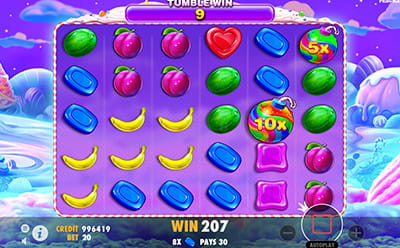
When comparing Sweet Bonanza alternatives Canada, the most useful question is not simply which title has the brightest design or most dramatic feature. It is whether the hosting operator gives you clear control over sessions, account security, game history and personal settings. The game itself has no independent player account, so anyone considering play sweet bonanza should assess the casino account around it. That distinction helps separate game-level controls from operator responsibilities before real-money play begins.
Which settings belong to the game, and which belong to the operator?
The slot interface normally provides controls connected with the current round. These can include stake selection, the spin button, sound and music settings, the rules screen and, depending on the casino’s implementation, quick-spin or autoplay functions. A game-history option may also show recent rounds. Such controls affect how the title is presented and played, but they do not manage the wider account.

Account-level settings are controlled by the casino hosting the game. These commonly include the player’s password, personal details, account balance, transaction records, identity checks and access to support. Deposit limits, loss limits, session reminders, cooling-off periods and self-exclusion also sit outside the game interface. Their availability and exact operation can depend on the operator and the rules applying in the player’s province.
This division matters when comparing alternatives. A polished game window cannot compensate for unclear account tools or difficult support access. Before choosing a title or operator, look for a settings area that explains how to change personal information, review activity and request restrictions. If a function is not clearly described, check the operator’s stated requirements rather than assuming the game supplies it.

How should you review session and autoplay controls?
Autoplay can be convenient, but it deserves careful inspection because its controls vary between implementations. Where available, it may allow a selected number of automatic spins and provide stop conditions. These can include stopping after a feature is triggered, after a single win reaches a chosen value, or when the balance rises or falls by a specified amount.
Do not treat those options as a complete spending safeguard. A stop condition based on balance may not work as you expect if the operator uses a different account display, and an automatic sequence can continue until its selected trigger is reached. Read the information panel before using it, and check whether the controls are available in the version loaded on your device.
A practical review can be completed in a few minutes:
- Confirm whether autoplay is present and where it can be stopped manually.
- Check whether loss, win or balance-change limits are offered.
- Note whether the game records rounds separately from the casino account.
- Look for a session timer, reality check or activity summary.
These checks are especially useful when comparing alternatives, because similar-looking games can offer different interfaces. If a feature is absent, use the operator’s account tools instead of relying on the game window alone.
What should be checked before changing account details?
Personal information, passwords and account recovery are not managed by the game provider. The casino normally handles email changes, password resets, locked accounts and requests to update personal details. It may also require confirmation before allowing changes, particularly where the update affects identity, payment ownership or withdrawal access.
Verification requirements can arise before a withdrawal or at another point in the account relationship. The operator may request government-issued photo identification, proof of address or evidence that a payment method belongs to the account holder. These requirements are not game-specific, and the title itself does not create a separate registration or identity-check process.
Use a unique password and enable two-factor authentication if the operator provides it. For broader account-security guidance, the Canadian Centre for Cyber Security offers public information on protecting online accounts and personal information. Avoid sending identity documents through unofficial support channels, and confirm the operator’s instructions before uploading anything.
Where can you check game history and account activity?
The game information screen may include a Game History function showing recent rounds. This can help clarify the result of a particular spin, especially when several wins occur during one tumble sequence. It should not automatically be treated as a complete financial record, however, because the game history and the casino’s transaction history serve different purposes.
For deposits, withdrawals, bonuses, account adjustments and broader session information, use the operator’s account area. The casino may retain records that do not appear inside the game window. If the two records seem inconsistent, save the relevant date, time and round details before contacting support. Clear records make a query easier to investigate.
When comparing alternatives, check how easy it is to find these records rather than focusing only on visual design. A useful account should make activity understandable without requiring the player to guess where information is stored. If a game-history button is missing, unavailable on mobile or limited to recent rounds, the operator’s published account and support procedures become particularly important.
Can mobile access change the available account controls?
HTML5 casino games are generally designed to scale across modern phones, tablets and desktop browsers. The same game grid and core features may appear on a smaller screen, but the surrounding account menus can be arranged differently. A settings button may be hidden behind a profile icon, while responsible-gambling tools may sit elsewhere in the operator’s website.
A separate game application is not normally required for browser access. If an operator offers a native mobile app, that app belongs to the operator rather than to the game. Check that the address is genuine, keep the device’s operating system updated and avoid saving account credentials on a shared device.
Before playing on a phone, open the account menu and identify the routes to support, password recovery, activity history and spending controls. Test whether the session can be ended cleanly and whether the game remains active after the browser is closed. Mobile convenience should not come at the cost of visibility: if an important setting is difficult to find on a small screen, use the full website or contact the operator before continuing.
Account-control questions readers often ask
Does the game have its own login?
No. Real-money access is normally provided through the casino account hosting the game. Password recovery, two-factor authentication, personal-data changes and locked-account procedures therefore belong to that operator. A demo mode, where offered, may use virtual credits and does not create an independent game account.
Can I set limits inside the game window?
Some game interfaces include autoplay stop conditions, but deposit limits, loss limits, session restrictions, cooling-off periods and self-exclusion are generally operator-level tools. Availability varies. Check the casino’s account settings and stated requirements rather than assuming that the game’s autoplay controls provide complete spending protection.
Where should I look for a disputed round?
Start with the game’s history screen if one is available, then compare its details with the casino account’s session or transaction records. Record the date, time and round information before contacting support. The operator hosting the game is responsible for investigating account access, balances and related records.